D-Day: June 6, 1944

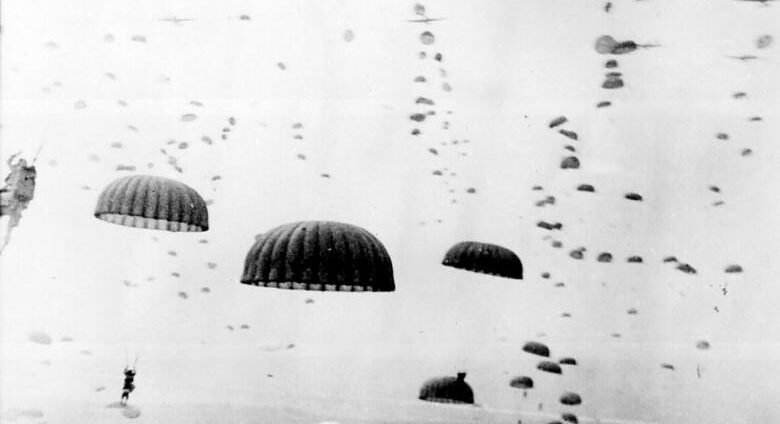
On the morning of D-Day, June 6, 1944, thousands of soldiers stormed the beaches of Normandy, France, to help liberate Europe from Nazi occupation. Hours earlier, in the middle of the night, more than 13,000 soldiers parachuted behind enemy lines as part of an advance force, preparing the way for the beach landing. Fr. Ignatius Maternowski, OFM Conv., a 32-year-old Franciscan Friar was among them.

Born in Holyoke, Massachusetts on March 28, 1912, Fr. Maternowski entered the religious Order of Friars Minor Conventual in 1932. He was ordained a friar priest in 1938. In 1942 Fr. Maternowski enlisted in the U.S. Army as a chaplain. After rigorous training with fellow troops of the 508th Parachute Infantry Regiment of the 82nd Airborne Division, he attained the rank of Captain. He offered Mass for his troops on the eve of the D-Day Invasion.

Fr. Maternowski touched down in the occupied territory of the hamlet of Gueutteville in the town of Picauville, in Normandy, France before dawn on D-Day. Enemy gunfire soon followed.
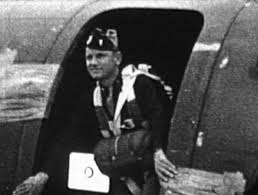
Fr. Ignatius Maternowski served as a U.S. Army Chaplain with the 82nd Airborne.

Seeing so many wounded paratroopers and glider cassualties assembling at a local home, Fr. Maternowski sought to negotiate with the Germans to establish an American medical facility protected by the Geneva Convention. Armed with only his chaplain’s insignia and a Red Cross armband, Fr. Maternowski bravely walked to the opposite end of the narrow county lane, under enemy control, to negotiate with the German major in charge.

After visiting the French home that served as the U.S. infirmary with the German, and agreeing to recognize it and an additional house as protected medical sites, Fr. Maternowski was fatally shot on his return to the makeshift U.S. infirmary. He was the only U.S. chaplain to be killed in action that day.

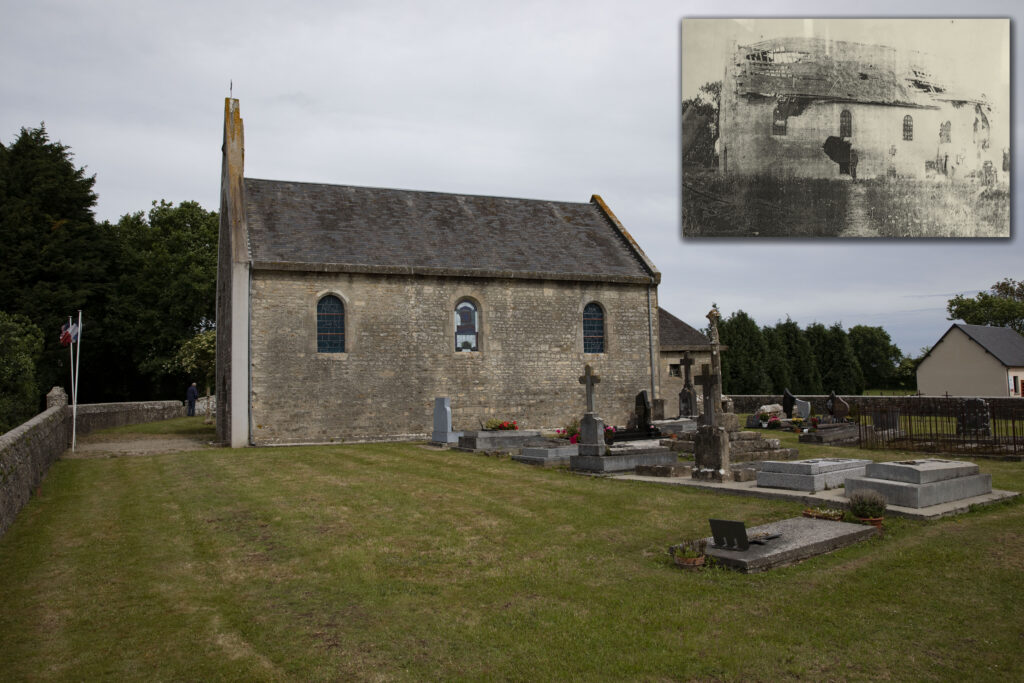
Cauquigny Chapel today with an overlay image of the wreckage of the same building during the war. Candlelight services commemorating Fr. Maternowski's sacrifice are held annually in the Chapel.

Previous tellings of this story have stated that Fr. Maternowski was seeking to establish a common aid station with the German solider for wounded on both sides of the conflict. New evidence and testimony from D-Day survivors suggests this was not the case, and in fact, Fr. Maternowski was relying on the Geneva Conventions of the time that would have protected an Allied Forces infirmary from enemy attack.